Clearly Understand Your Dietary Preferences, Quickly and Accurately Choose Each Delicious Meal
UX/UI Design – Records
Development Software
Figma
Team Members
Independent Production
Roles
UI Design, UX Researcher
DATE
2024/05
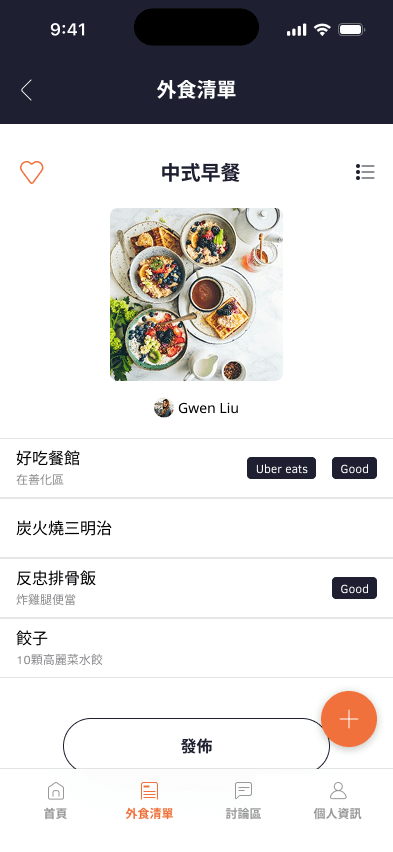
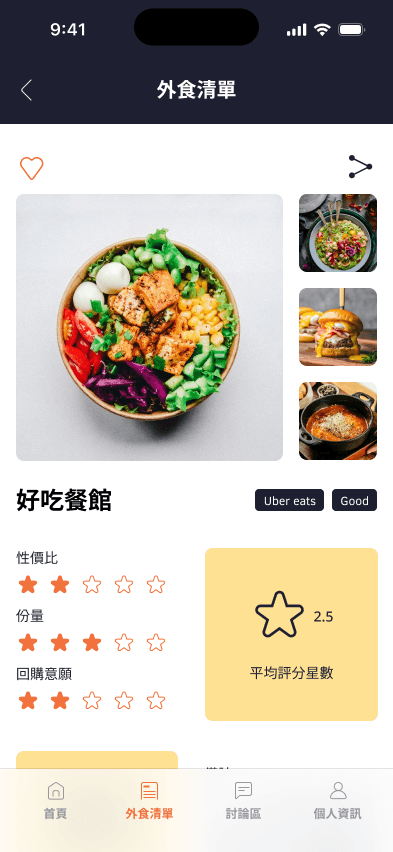
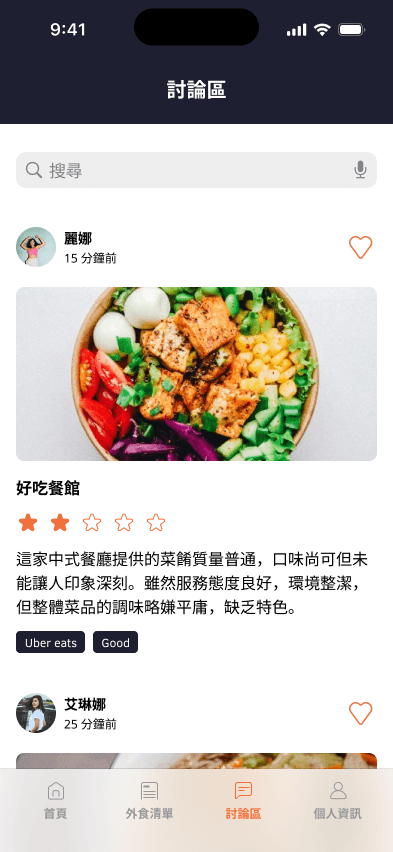
Do you want to know which meals suit your taste best? This app records and deeply analyzes your food delivery information, providing visual insights into your dietary preferences and behaviors, enabling you to select your next delivery meal more quickly and effectively.
Background
“What should I eat today?” This question has become harder to answer than ever — especially with the rise of food delivery apps. Faced with an overwhelming number of restaurant options, we often spend a lot of time scrolling, only to end up making no decision at all. This indecisiveness often stems from two things: lack of transparency in information and unclear personal preferences.
According to my survey, over 70% of respondents said they often feel unsure about portion sizes, real taste, or overall experience. Many also forget which meals they previously enjoyed.
To help people better understand their eating habits, I designed Records — an app that records, organizes, and visualizes food delivery history. It not only helps users review their past orders, but also assists them in making faster and more confident decisions through a preference map and a real-user review system.
Problems Identified
Based on surveys and initial user interviews, I identified two major problems:
Decision fatigue: Too many meal options and inconsistent sorting mechanisms make it difficult for users to quickly decide what to order.
Lack of transparency: Users feel uncertain before placing an order because they don’t have access to trustworthy reviews, portion size details, or actual taste experiences.
Objectives
Based on the preliminary investigation, we set the following two main project goals:
Help users understand their food preferences through past order records to improve decision-making efficiency.
Create a space for honest reviews, so users can refer to real experiences and make smarter food delivery decisions.
As a one-person team, each stage from research to design required careful consideration and meticulous planning to ensure the project progressed smoothly and achieved the expected goals within limited resources.
Research & Planning
To understand the problems users face when ordering food, I started with a survey that collected insights about their frustrations and needs when using delivery platforms.
I received 107 valid responses, excluding 2 from non-delivery users. The analysis revealed some clear usage patterns:
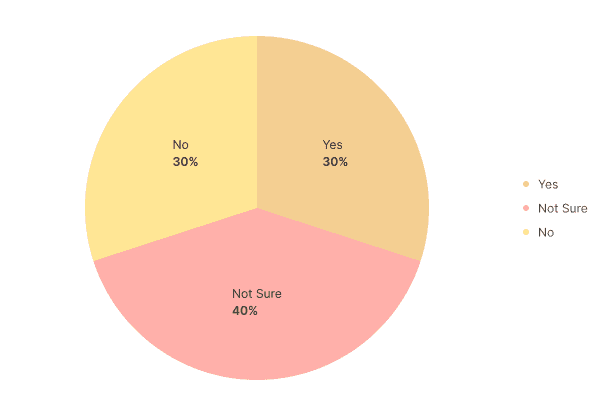
Do you know in advance what you want to eat? (Do you experience choice difficulty?)
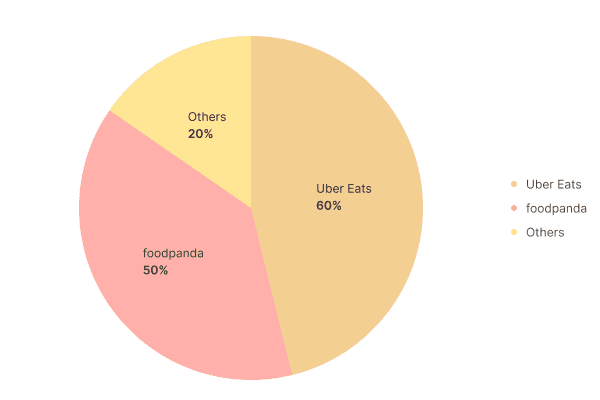
Delivery platform usage preferences (How many platforms do you use simultaneously?)
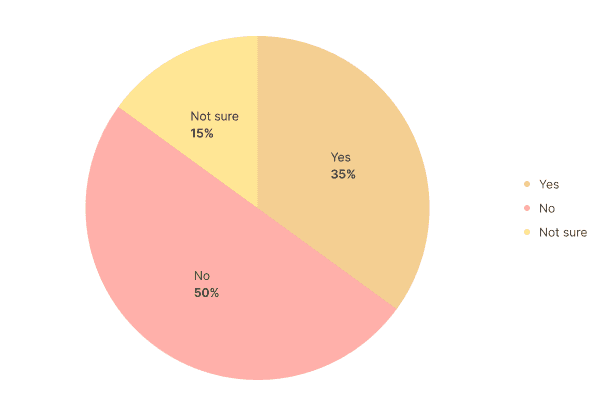
Desire to record dietary intake (Is there a need for dietary management?)
Over 40% of respondents said they had “no idea what to eat”, showing that indecision is a widespread issue.
More than half of users open both Uber Eats and foodpanda simultaneously to compare discounts and prices.
Around one-third expressed a desire to track their eating habits long-term—a need that is often underestimated but very real.
Two Types of Users Who Struggle with Food Delivery
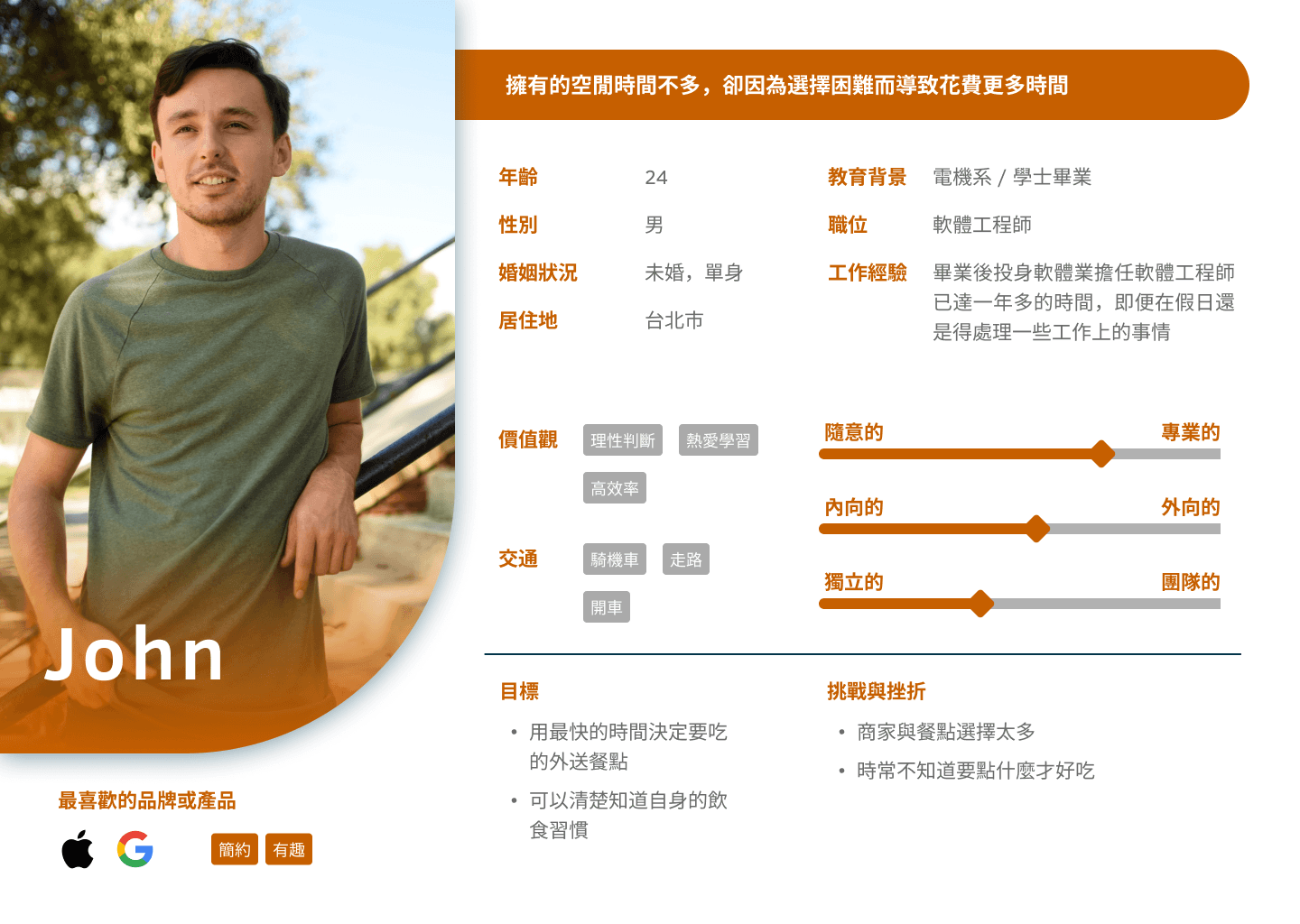
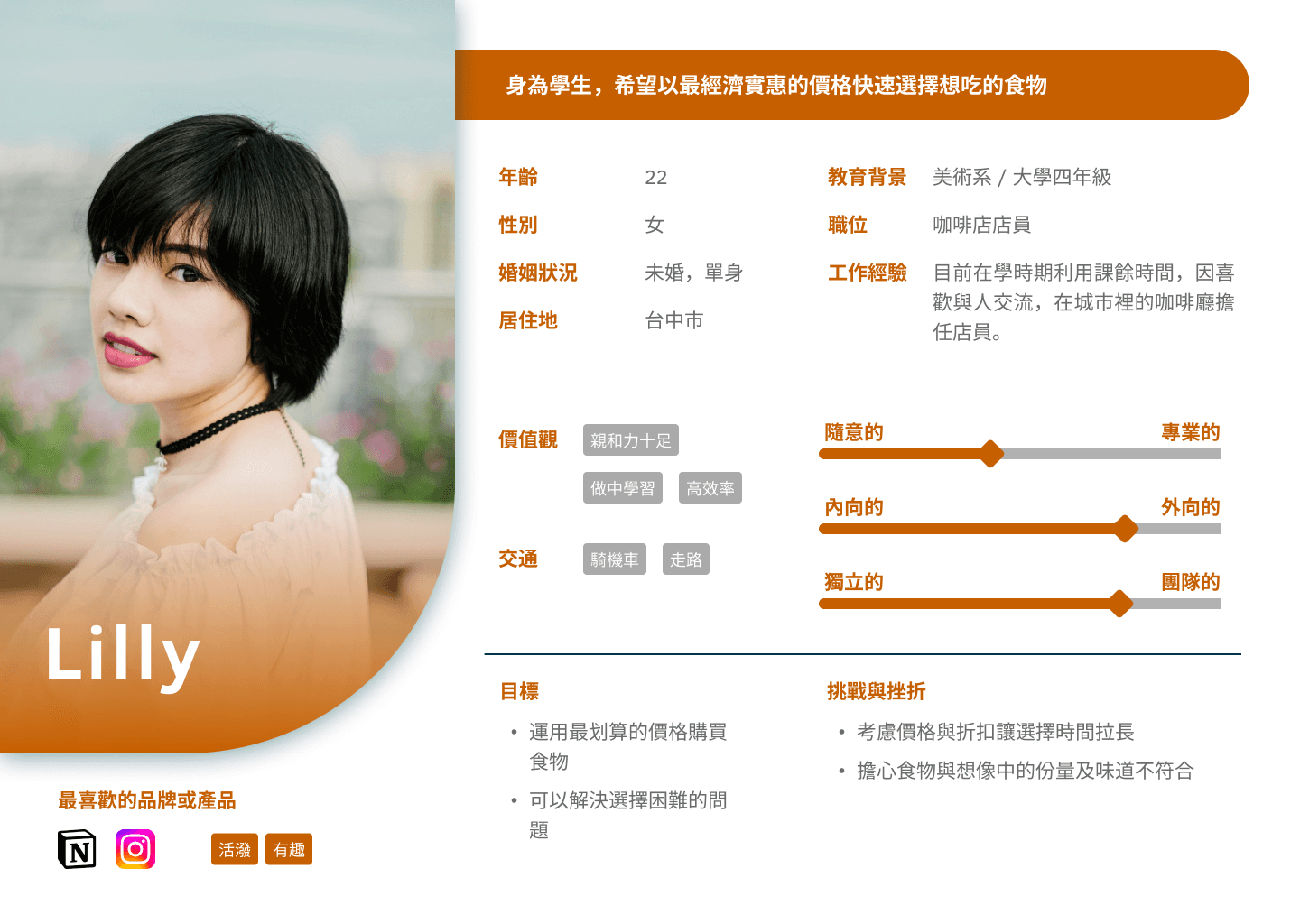
I further segmented users and created two representative personas:
Office Worker (Engineer): Busy with work and short on time, they want to decide quickly but don’t want to settle for low-quality meals.
Student: Price-sensitive and frequently unsure about portion size or taste, often leading to post-order regret.
What They Told Me: 3 Core Problems
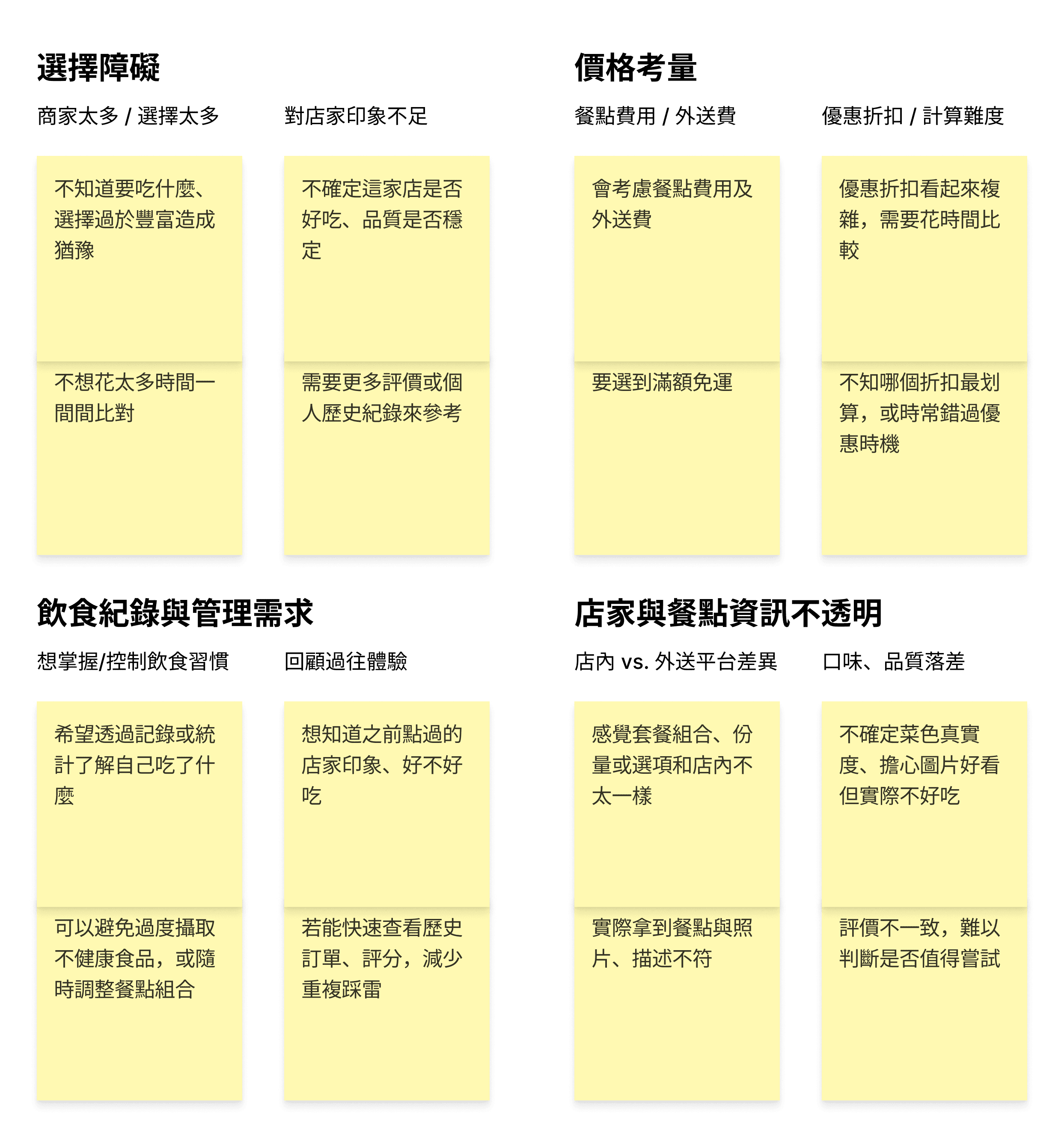
To make sense of the large volume of feedback, I used an Affinity Diagram and uncovered three key insights:
Users face a dual challenge: too many options and too little helpful information.
They feel uncertain about price, quality, and portion size.
They want clear, personalized records and suggestions to guide future decisions.
It’s Not Just Indecision—It’s a Lack of Reliable Reference
These insights led me to further define the problem statements and design hypotheses:
Too much—but unclear—information makes it hard for users to weigh price and quality when ordering delivery.
Lack of personalized food records prevents users from learning from past experiences, making it difficult to avoid mistakes or repeated searches.
How Might We Help Users Order with Confidence?
To tackle these challenges, I framed two design questions (HMW):
How might we present clearer and more transparent meal information—such as real photos and trustworthy reviews—to help users make quicker, more confident decisions?
How might we design a personalized system that tracks and analyzes food behavior to serve as a decision-making tool for future orders?
Would This Make the Decision Easier?
These HMW questions helped me establish two preliminary design hypotheses:
If we provide personalized order history, users will be able to quickly reflect on past experiences—reducing hesitation and the chance of ordering something unsatisfactory.
If we improve transparency in meal information and reviews, we can better manage user expectations and reduce negative experiences.
Making Food Choices More Fluid
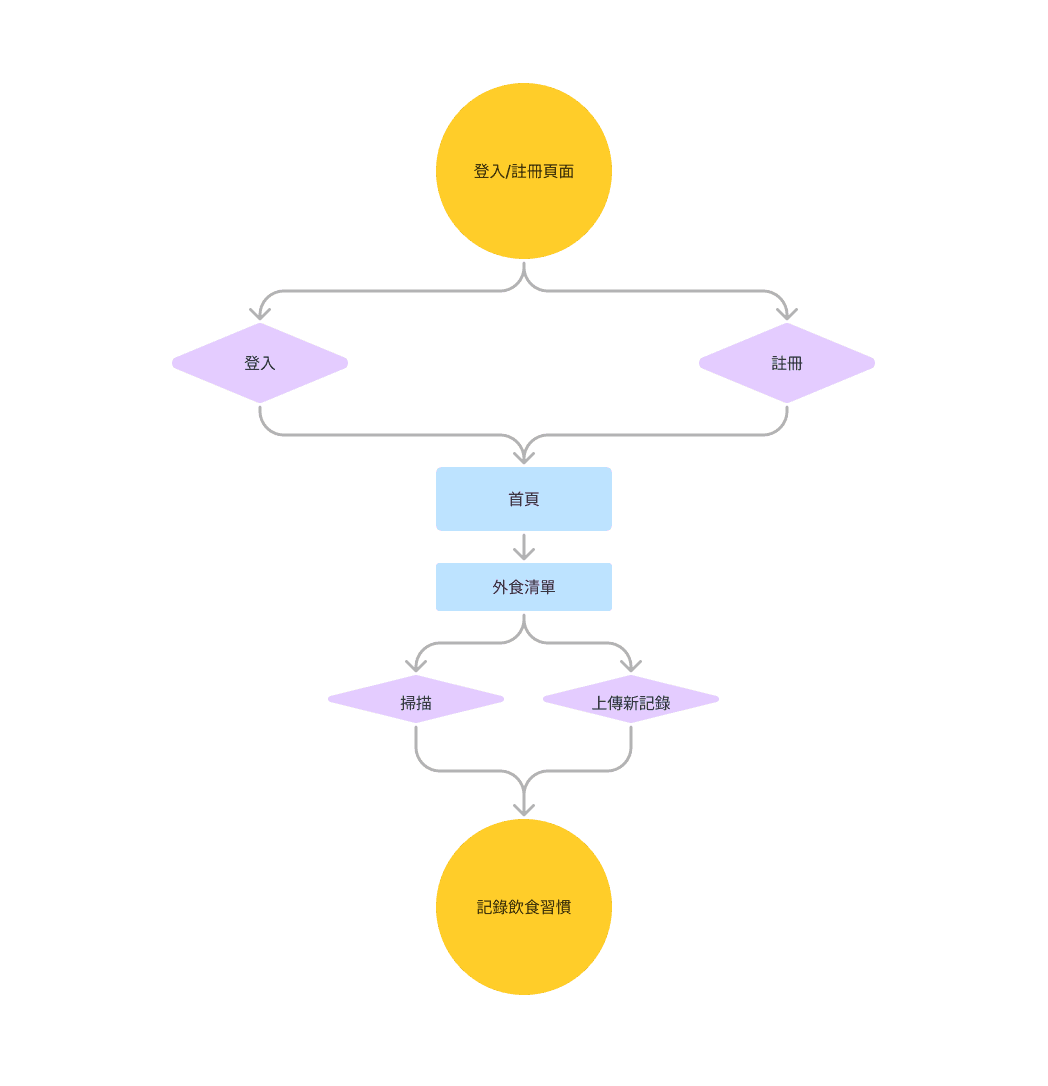
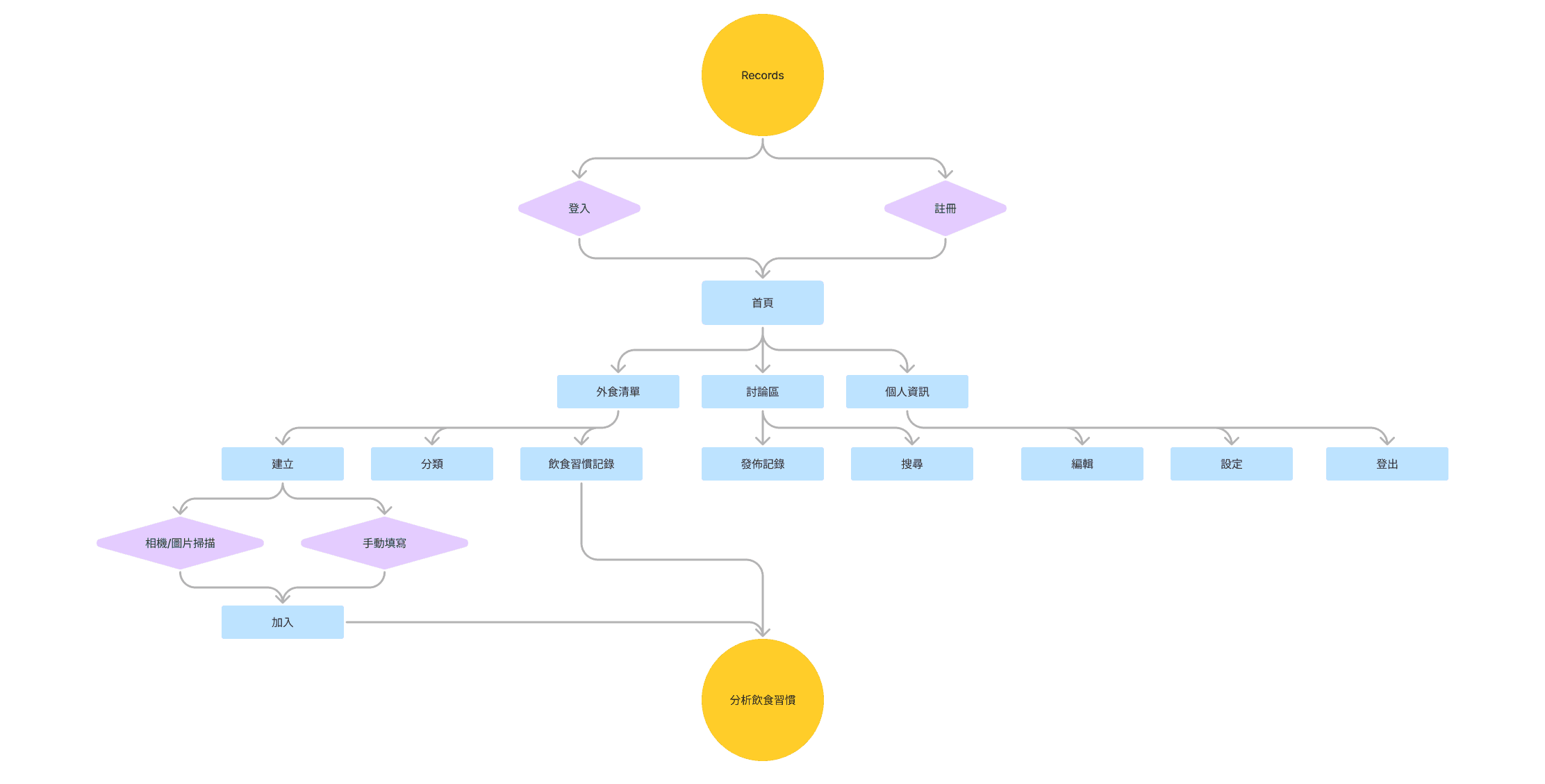
Based on these insights and hypotheses, I designed the core feature structure and user flow of the system. The goal was to ensure a seamless cycle of recording → reviewing → deciding—so users can move through the decision-making process with ease and confidence.
User Flow
Information Architecture
Design & Prototyping
Low-Fidelity Design
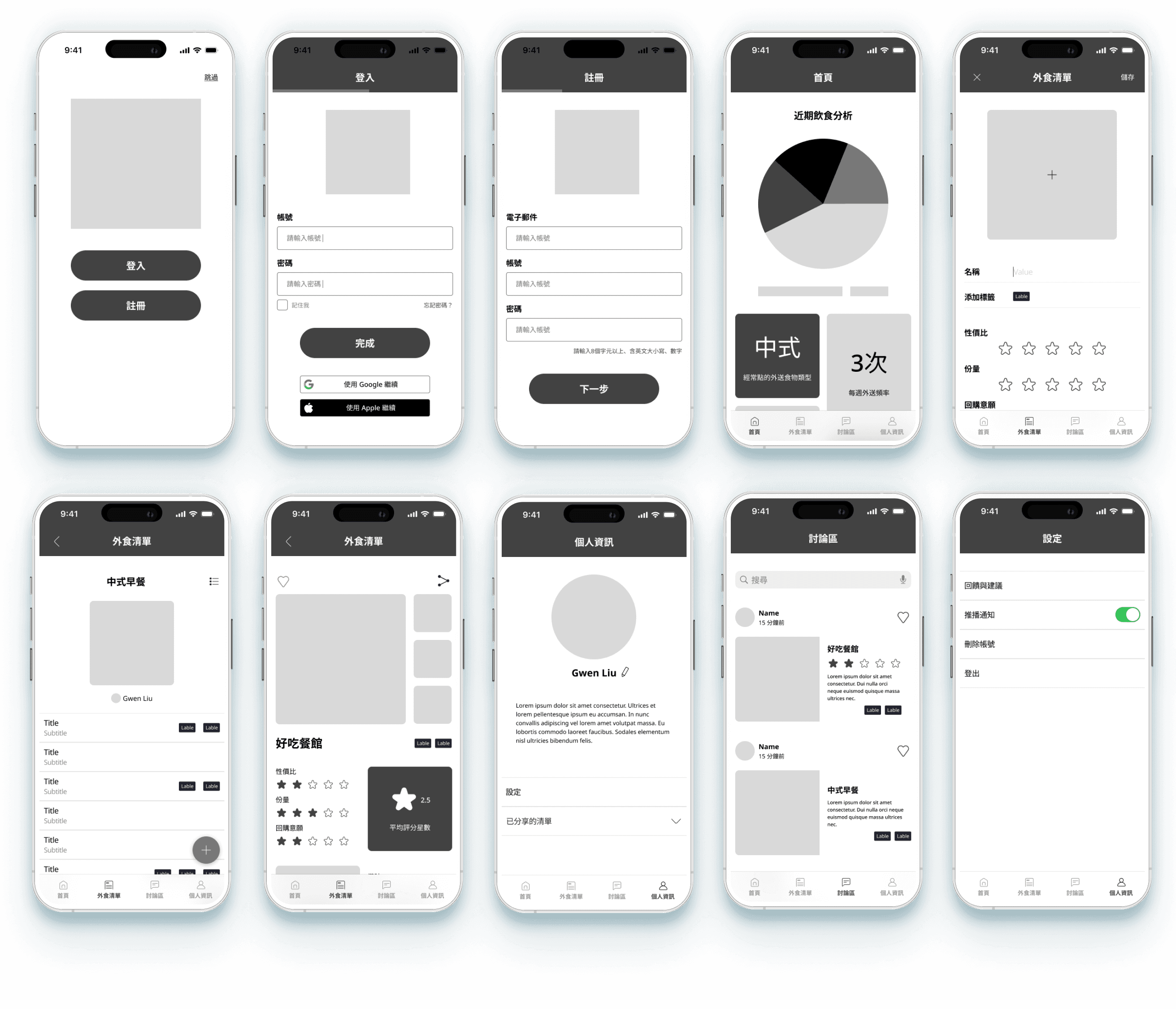
Based on user feedback and earlier hypotheses, I designed two core features to help users make quicker ordering decisions, reduce the risk of disappointment, and increase trust and continuity in their food delivery experience.
Personalized Meal Order History
The system organizes this data into visual charts and preference insights, allowing users to clearly see their most frequently ordered items, taste preferences, and favorite restaurants—giving them a personalized reference for future decisions.
Meal Information and Review Sharing
I also designed a clear and transparent review system that encourages users to share honest feedback on portion size, taste, and overall experience. These reviews are integrated into each meal’s detail page, helping others form accurate expectations, boosting confidence, and reducing hesitation or the risk of regret.
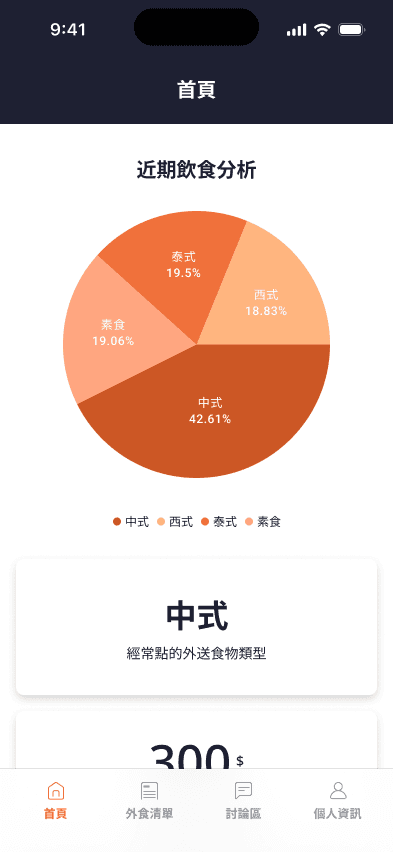
The core goal of Records is to help users quickly find meals they’ve previously enjoyed, without endlessly searching or second-guessing. By offering a personalized record system, the app not only improves decision-making efficiency but also builds stronger trust and engagement with food delivery platforms.
Reflections and Challenges
Looking back on the entire process, I spent a significant amount of time analyzing survey results and user feedback, which made the design phase more time-constrained. This experience taught me the importance of referencing competitive analysis and existing solutions earlier in the process—doing so could have provided more inspiration and allowed better time allocation for visual design and feature validation.
Future Outlook
If given the opportunity to develop and launch this product, I would validate the design hypotheses through user testing and data feedback. Key questions include:
Does the personalized order record feature improve decision-making speed?
Does the review system help users avoid disappointing meals or post-order regret?
Overall, does the app genuinely enhance the food delivery experience?
Back To Top